February 26th, 2026
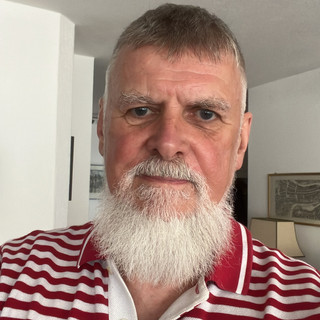
Last Wednesday, my colleague René, a motorcyclist from Cologne, called in for a visit. It was far from an ordinary visit: after several weeks spent almost exclusively at home, I finally got back on the road, quite literally. Thanks to René, I was able to take the car out for the first time since mid-December.
The following morning, Thursday, he kindly drove me to the orthopaedic centre for my routine appointment. Afterwards, I went to see the hairdresser, something that was well overdue.
With appetites whetted by those two stops, we headed to enjoy a delicious Afghan buffet for lunch. The rich dishes and subtle flavours gave the meal a real celebratory feel.
That afternoon, I had a few bags of items ready to dispose of for good, so we made our way to the recycling centre to get rid of them in a responsible way.
When evening came, the day ended on a similarly pleasant note at the local Italian restaurant, where a good pizza and lively conversation with René drew our little adventure to a close.
The next day, Friday, we took care of a few essential errands before saying our goodbyes. His visit did me a world of good, getting out beyond my four walls was truly uplifting. So, a big thank-you to you, René.
Two months ago, I underwent the second of the final three planned surgical procedures. At that point, I was convinced that the acute phase was behind me and that recovery would follow a relatively straightforward course. The reality, however, proved slightly different.
Two months later, I am still undergoing treatment for a complication relating to the scar. The cause is simple, almost banal: a brief lapse in attention when placing the sutures. One technical detail, a stitch and knot not quite properly secured, and the course of wound healing shifts.
Professor Krause had to intervene personally to remove the suture thread that had remained embedded in the wound, complete with its knot. From a sensory perspective, it is fair to say that the experience was not particularly pleasant. Locating and extracting a retained thread from tissue already sensitised by several prior procedures is, for the patient, far from a trivial matter.
Subsequent wound management involved the implementation of negative pressure wound therapy, combined with an appropriate dressing, in order to evacuate secretions and actively promote wound closure. In addition, the application of medical-grade honey supported the healing process. The results speak for themselves. An opening of approximately one centimetre in diameter gradually reduced to just a few millimetres.
But this delay and these complications were truly unnecessary! ☹
From Monday, at my next appointment with the wound specialist, the pump will be replaced with a simple waterproof dressing. It may seem minor, but being able to wash my foot and leg myself in the shower is a real step forward in terms of independence and quality of life.
I also received a new cast this morning, which should be able to come off by the end of March. After several months of immobilisation, that date almost feels like a little celebration!
Alongside the medical treatment, another dimension emerged: the administrative process with my health insurer, CSS. Reimbursement for medical transport and domestic assistance in December was initially declined on the grounds that the prescription had been issued only after the final procedure in January.
However, both the diagnosis and the justification for all three operations were clearly stated on the prescription. The insurer nevertheless required a separate prescription for each individual procedure. A prescription, of course, is not a symbolic document issued free of charge. It forms part of a billable medical service. Requiring additional prescriptions inevitably generates additional administrative costs. This requirement struck me as somewhat overzealous.
Following further correspondence and clarification, the matter was resolved and all services were ultimately reimbursed.
This experience illustrates that the success of medical treatment depends on far more than the surgical act itself. It rests equally on attention to detail, the quality of post-operative care, the effectiveness of therapeutic measures, and the smooth functioning of administrative processes. When these elements align, recovery progresses. When even one link weakens, the journey becomes longer.
Fortunately, in my case, the story is now moving in the right direction. And if this experience has taught me one thing, it is patience.


Comments