December 16th, 2025
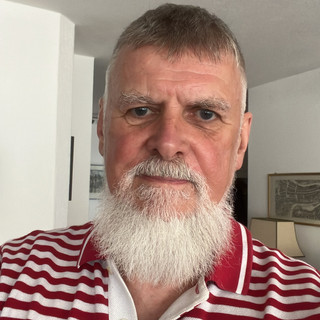
Yesterday was a significant day. One of those days that are not easily forgotten: my eighth surgical operation on my left foot. It is still the same story, which began far from here, following a hiking accident in the Moroccan Atlas in May 2023. An adventure that clearly enjoys long chapters.
The day started at 8.30 a.m., when I left my apartment by taxi to go to Sonnenhof Hospital. Hardly had I arrived when the admission formalities were completed and checked with typically Swiss precision. I was then sent to the laboratory for a blood test, before being shown to my room at the very end of the corridor, a strategically chosen location: quiet, secluded, and ideal for concentration… or a short nap.
Officially, it is a double room, though with only one bed and a small seating area. Discreet comfort. While I settle in, a nurse completes the admission details on her computer. No sooner is this done than I am called in to see the anaesthetist.
In the Swiss healthcare system, international backgrounds are common. My anaesthetist, who is of German origin, is no exception, and this is far from the first time, as this is already the sixth operation carried out with a colleague from across the border. This time, however, he proposes a slightly different approach.Normally, a spinal anaesthetic lasts around three hours. During previous, longer procedures, its effect was extended through additional infusions. On this occasion, he opted for a combination: a spinal anaesthetic supplemented by a targeted block of the tibial nerve, administered behind the knee. The result is that the entire foot is numb from the knee down for approximately fourteen hours. This takes over once the spinal anaesthetic wears off and, above all, ensures a pain-free night, always a welcome promise.
Hardly back from this consultation, I am taken to the pre-operative area. A nurse inserts an intravenous line through which various medications will be administered. This time, no central venous catheter is required, as no antibiotics likely to irritate the veins are planned. I meet the anaesthetist again, who carries out exactly the procedure we had discussed and agreed upon in advance.
Due to my scoliosis, spinal anaesthesia is always something of a challenge. Finding the right access point can be a test of patience. Once again, it takes three attempts, but the third is successful. The effect is almost immediate: first a sensation of warmth, quickly followed by loss of feeling. The tibial nerve block is performed under ultrasound guidance to precisely locate the nerve. The procedure proceeds without complications.
I am then transferred onto a mobile operating table and wrapped in heated blankets in a sterile transfer area. The operating theatre is kept at a constant temperature of around 19°C. From there, I am taken to operating theatre number one, one of the hospital’s six theatres. I am welcomed by several familiar faces. Over time, one gets to know each other.
Once positioned on the operating table, narrow, as always, I am securely strapped in place to prevent any unintended movement. My leg and groin are shaved and disinfected three times. The groin is prepared because an incision is required to collect bone material from the iliac crest (the pelvis), which will later be used to reconstruct the ankle… or what remains of it.
Then, almost without warning, I fall asleep at 12.07 p.m., a full hour earlier than planned. I wake up in the operating theatre while the team finishes the stitches and applies the dressing. As usual, I have no memory of this moment.
I am then transferred to the recovery room. I am offered water and salted pretzels, and my phone is returned to me. It is 6.16 p.m. The operation has therefore lasted nearly six hours.Shortly afterwards, the entire surgical team comes to explain how the operation went. Overall, everything has proceeded largely as planned. The connective tissue had to be removed in order to reposition the foot correctly and align it with the leg, which caused some difficulties. One of the screws intended to secure the rod running from the heel up into the tibia could not be placed optimally. However, this is not expected to have any functional consequences.
After about an hour in the recovery room, I am taken back to my room. A light meal is waiting for me: dried Grisons meat, cheese, and soup. After an almost complete day of fasting, my enthusiasm is considerable.
Fatigue quickly takes over, and I fall asleep without pain. Until 12.30 a.m., when a nurse wakes me for a preventive injection against thrombosis. She also replaces the infusions: Metamizole for pain relief and an antibiotic. In addition, I have access to a pain pump with Fentanyl, which I can activate if necessary. I use it mainly because of the incision in my groin. As I sleep on my side, this area is particularly sensitive.
I wake up around 6.00 a.m. feeling generally well. Shortly afterwards, the night nurse checks my vital signs before finishing her shift. At 7.00 a.m., Professor Krause and his assistant come by to see how I am doing. They appear satisfied and inform me that I should receive a cast later in the morning.
Around 8.00 a.m., breakfast is served, perfectly timed and very welcome. After a quick wash, I prepare for the next item on the schedule: a visit to the plaster room. There, I meet one of the two specialists who have already made my previous casts. At this point, we could almost exchange loyalty cards. Conversations with him are always engaging. Adopted as a child from Peru and an enthusiastic traveller, we discover many shared experiences as we talk.
I then return to my room with an elegant black “cast” a small privilege, as one can choose the colour of the bandage here. Strictly speaking, it is not a traditional plaster cast, but a removable shell made of synthetic material. It makes care and inspections much easier. Practical, modern and almost comfortable, if not exactly a fashion accessory.
At lunchtime, as I am eating calmly, my mother calls. She needs to bring me an important and urgent document required to finalise the estate of my aunt Charlotte, who passed away two years ago. The document must be submitted to the attorney this week. Even in hospital, certain deadlines do not take a break.
Deniz also calls. He plans to travel especially from Olten to visit me in the evening. This is absolutely not necessary, but I cannot bring myself to discourage him. Some gestures are not to be debated, they are simply appreciated.
In the afternoon, the physiotherapist will come by for the first walking exercises using crutches. I should also receive a medical scooter again, allowing me to move around while keeping all weight off the operated foot. A new phase begins, defined by caution, patience… and assisted mobility.


Comments