June 7th, 2026
Friday 29 May began like any ordinary day. Yet only a few hours later, a very real experience would raise several questions about the organisation of healthcare and the information provided to patients.
Around midday, Deniz called to tell me that he had not gone to school. Severe abdominal pain was preventing him from attending his classes. Later that afternoon, he decided to go to the Emergency Department at Olten Hospital, where he is also undertaking his nursing training.
After a long wait, blood tests were carried out and he was given pain relief. The results already showed an abnormally high level of infection. However, no ultrasound examination could be performed that day because there was no qualified staff member available to operate the equipment. A new appointment was therefore scheduled for the following day.
On Saturday afternoon, Deniz returned to the Emergency Department. Another long wait. Another blood test. This time, the inflammatory markers had increased even further. The doctors now strongly suspected appendicitis.
For personal reasons, Deniz preferred not to undergo surgery in the hospital where he works. The emergency physician therefore arranged for him to be transferred to Aarau Hospital.
With increasingly severe abdominal pain, he set off on a journey by bus and train to Aarau. Upon arrival, approximately 45 minutes later, the medical team was already expecting him. The surgeon who would potentially perform the operation came to meet him and discuss the planned procedure.
That was when the surprise came.
The surgeon explained that his health insurance would most likely not cover the costs of hospitalisation at that facility. The hospital was located in a different canton from the one in which he resides, and under his basic health insurance only hospitals within his canton of residence were covered.
This information could, however, have been communicated much earlier. Olten Hospital had all the necessary information to verify his insurance coverage and inform him before arranging the transfer in another canton.
Faced with this situation, Deniz decided to return to Olten. A CT scan was finally performed and confirmed the diagnosis beyond any doubt: acute appendicitis.
When he asked why he had been referred to Aarau without being informed of the potential financial consequences, the response was, to say the least, surprising: “The surgeon has medical training, not training as an insurance specialist.”
A remark that might almost raise a smile if the potential consequences for the patient were not so real.
By now, it was already 11 p.m. He was then advised to go to Solothurn Hospital, a modern and exceptionally well equipped facility. An excellent suggestion, except that at that time of night there was no longer any public transport available to get there.
He therefore returned home and presented himself at Solothurn Hospital on Sunday morning.
A few hours later, he underwent laparoscopic surgery. At around 1:30 p.m., I received a call from the surgeon. Everything had gone perfectly well. The operation had been a complete success.
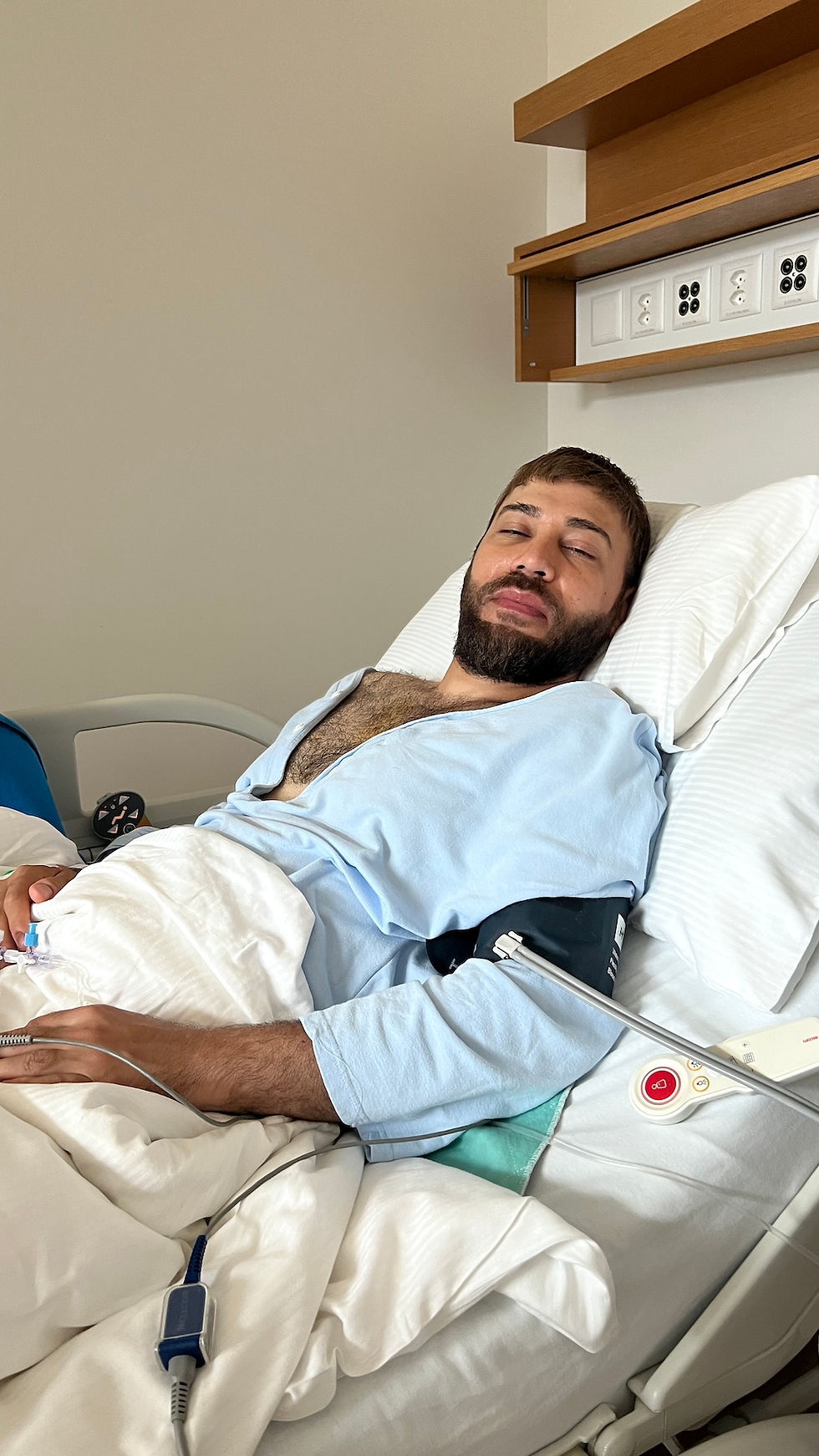
When I visited him on Sunday afternoon, Deniz was already in good spirits, although the effects of the anaesthetic still left him looking slightly disconnected from reality.
The following Tuesday, he was able to return home. He was prescribed two weeks of rest. Unfortunately, this coincided with the examinations at the end of his first year of training. Fortunately, a solution was found and he will be able to sit the examinations as soon as his health allows.
This experience highlights some of the particular characteristics of the Swiss health insurance system.
Every citizen is free to choose their health insurance provider. The mandatory basic insurance benefits are identical throughout Switzerland, regardless of the insurance company. Nevertheless, premiums can vary dramatically depending on the insurer, the insured person's age and even the municipality in which they live.
In addition, there are numerous supplementary insurance options, including the freedom to choose any hospital. In Deniz's case, this option would have cost approximately CHF 4.00 per month. A modest amount when compared with the administrative complications that can arise when such coverage is not in place.
This situation illustrates a uniquely Swiss paradox. While the country enjoys one of the most advanced and expensive healthcare systems in the world, the rules governing coverage and reimbursement can still be complex, difficult to understand and insufficiently explained to patients.
The most important thing, however, is that Deniz is now doing very well and recovering quickly.
As if the story had not already been eventful enough, on Friday evening it was my turn to experience severe abdominal pain.
Having undergone an appendectomy during my school years, appendicitis was fortunately easy to rule out. However, the pain intensified rapidly. Vomiting, fever and chills soon completed the picture. It was a particularly unpleasant night.
On Saturday morning, there was only minimal improvement. I decided to contact the medical advice helpline. After spending what felt like an eternity in the waiting queue, giving me ample opportunity to reflect on the meaning of life, I finally reached an adviser. After a few questions, the most likely diagnosis emerged fairly quickly: viral gastroenteritis.
This assumption was confirmed shortly afterwards by Rita-Maria, who informed me that several of her colleagues were suffering from exactly the same symptoms.
As with my foot over the past three years, the main prescription remained unchanged: patience.
Throughout the day, my condition gradually improved. Despite having very little appetite, I managed to eat soup, semolina and drink large quantities of tea. After a much more restful night, I woke up on Sunday morning feeling considerably better.
It was certainly not the scenario I had imagined for celebrating my 68th birthday!


Comments